
Blog
What Is Included in Engine Diagnostics? A Complete Guide
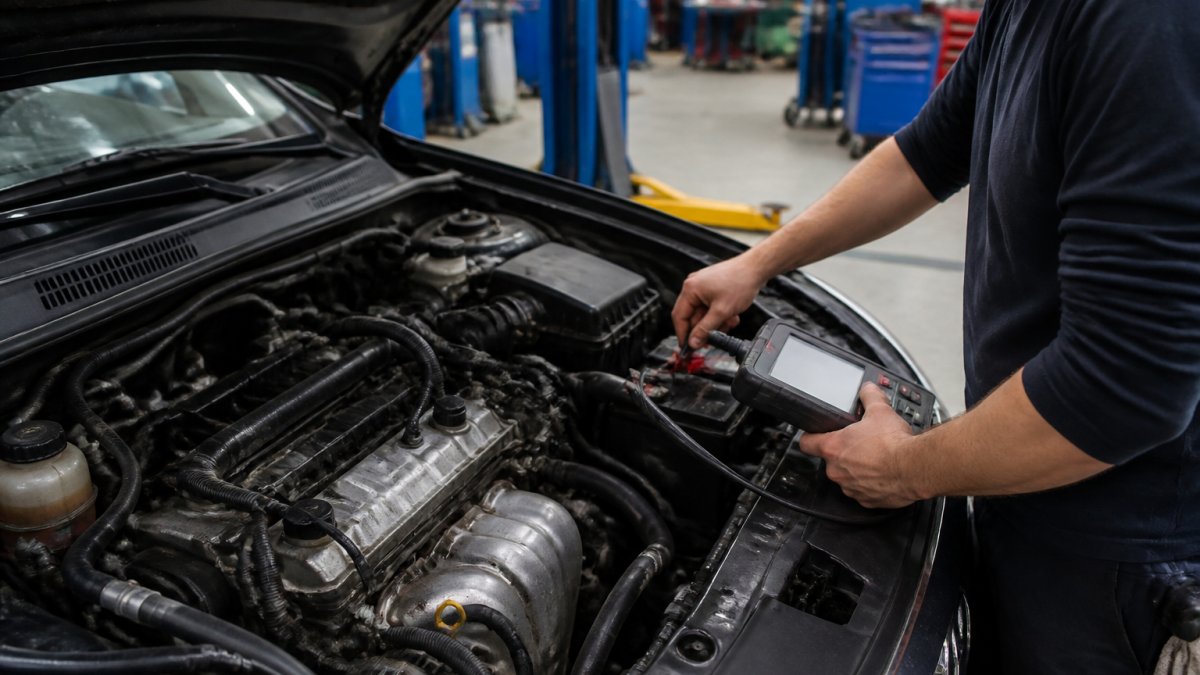
Table of Contents
- What Is Included in Engine Diagnostics: The Full Breakdown
- Check Engine Light Diagnosis: What the Warning Actually Tells You
- The OBD-II Scan: Your Engine’s Built-In Reporting System
- Beyond the Scan: Physical and Sensor Testing in a Full Diagnostic
- How Long Does an Engine Diagnostic Take?
- Engine Diagnostic Cost: What Drives the Price
- Conclusion
- Frequently Asked Questions
Last Updated: October 21, 2026
What Is Included in Engine Diagnostics: The Full Breakdown
Engine diagnostics is the process of finding out why a vehicle’s warning light is on or why it is running poorly. It combines a computer scan, sensor testing, and a physical inspection of parts. At Powder Spring BLT, we run this full process on cars across Powder Springs, GA, because a scan alone rarely tells the whole story.
Here is the short answer: a real diagnostic includes four things. A check engine light scan, a review of live sensor data, physical testing of parts, and a road test to confirm the fix.
Most drivers think diagnostics means plugging in a scanner and reading a code. That is one step out of many. The code points to a system, not a failed part. A trained mechanic still has to test the circuit, the sensor, and the wiring before replacing anything.
Below, we break down each step so you know exactly what you are paying for. We will also cover how long it takes and what drives the price.
Check Engine Light Diagnosis: What the Warning Actually Tells You
A check engine light diagnosis starts with reading the stored code, then testing the system that code points to. The light itself only says the computer detected a fault. It does not name the broken part.
A steady light means a fault was logged. A flashing light means something serious, like a misfire that can damage the catalytic converter (Environmental Fact Sheet Frequently Asked Questions About On-Board Diagnostics). If your light is flashing, stop driving and get it checked.
Here is what a proper diagnosis looks at:
- Stored codes from the engine computer
- Freeze frame data, which shows engine conditions at the moment the fault set
- Pending codes, which catch problems before they trigger the light
- Readiness monitors, which show whether the computer has finished its self-tests
The freeze frame is where a lot of shops cut corners. It records engine speed, temperature, and load when the fault happened. That snapshot often separates a real sensor failure from a wiring issue.
Clearing the code to make the light go away does not fix anything. It erases the freeze frame data a mechanic needs, and the light usually comes back within a few drive cycles.
The OBD-II Scan: Your Engine’s Built-In Reporting System
An OBD-II scan is the first step of engine diagnostics. It reads the fault codes your vehicle’s onboard computer has stored. Every car sold in the United States since 1996 has this port, which sits under the dashboard near the steering column.
The scan takes minutes. Interpreting it takes training. A single code like P0301 means a misfire in cylinder one. The cause could be a bad spark plug, a failing coil, a vacuum leak, or a fuel delivery problem. The scan narrows the search. It does not finish it.
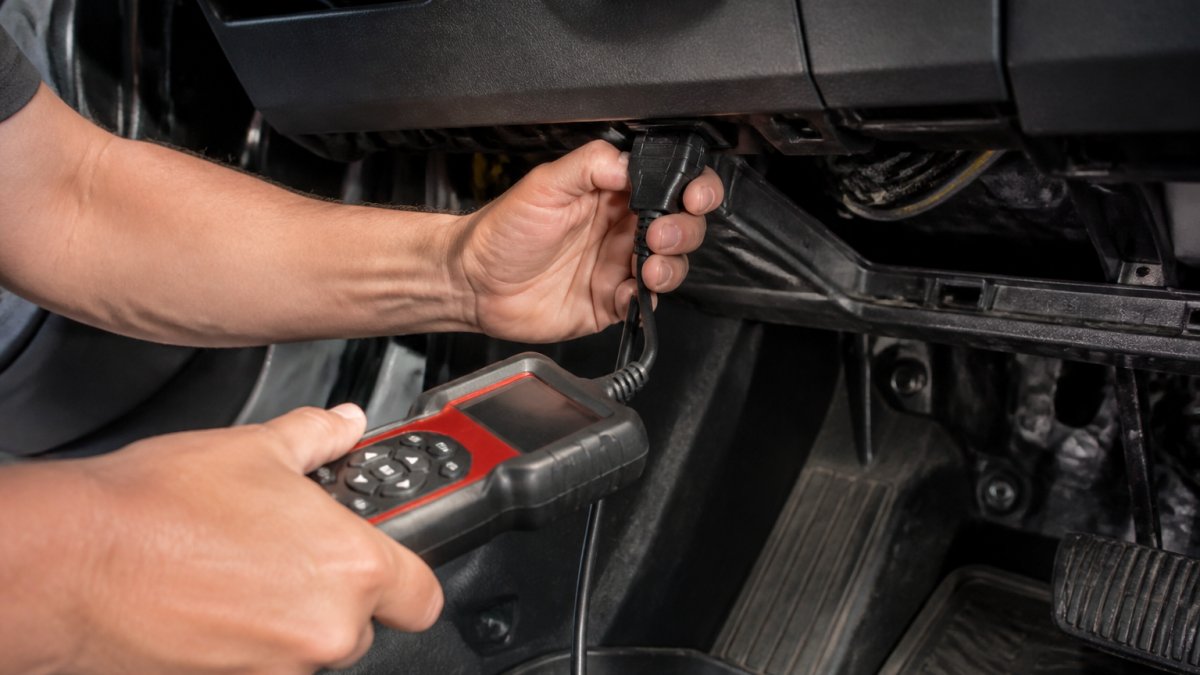
We also read live data during a scan. That means watching sensor readings change as the engine runs. A good mechanic compares those readings to what the manufacturer expects. A mass airflow sensor reading that looks normal at idle but drifts under load tells a very different story than one that fails outright.
The EPA’s guidance on onboard diagnostics explains how these systems monitor emissions parts. It is a useful reference if you want to understand what the computer is actually checking.
Beyond the Scan: Physical and Sensor Testing in a Full Diagnostic
Physical testing is where a full diagnostic earns its keep. After the scan, a mechanic tests the actual parts the codes point to. This step catches what the computer cannot see.
Common tools and what they reveal:
| Test | Tool Used | What It Reveals |
|---|---|---|
| Fuel pressure check | Fuel pressure gauge | Weak pump or clogged filter |
| Spark test | Ignition tester | Weak or dead ignition |
| Compression test | Compression gauge | Worn rings or valves |
| Vacuum leak check | Smoke machine | Cracked hoses or intake leaks |
| Circuit test | Multimeter | Broken wires or bad grounds |
A common mistake is replacing the sensor a code names without testing the circuit first. A code for an oxygen sensor can come from a bad ground wire, not a bad sensor. Swapping parts on a guess gets expensive fast.
We also check the basics during this step. Fluid levels, belt condition, and air filter state all affect how the engine runs. Sometimes the fault is simple. A clogged air filter or a loose gas cap can trigger a warning light.
Ask for the freeze frame data and the test results in writing. A shop that cannot show you why a part failed is guessing, and you are paying for the guess.
How Long Does an Engine Diagnostic Take?
A standard engine diagnostic takes about one to two hours for most vehicles. A simple code read takes minutes, but a full diagnostic with testing takes longer. Complex issues, like intermittent faults or electrical gremlins, can take several hours or require the car to stay overnight.
Here is what affects the timeline:
- Number of codes stored in the computer
- Whether the fault is constant or intermittent
- Access to the failing part, since some engines bury sensors deep
- Whether a road test is needed to reproduce the problem
Intermittent problems are the slowest. A fault that only shows up on cold mornings or under highway load may need a test drive with a scanner connected. We tell customers upfront when a car needs more time. No surprises on the bill.
If you need your car for work, ask about scheduling. Many diagnostics can be done the same day if you book ahead.
Engine Diagnostic Cost: What Drives the Price
Engine diagnostic cost depends on the time the job takes and the complexity of the vehicle. Pricing varies by shop, by vehicle make, and by how deep the testing goes. We do not quote a flat number here because a four-cylinder commuter car and a turbocharged truck are very different jobs.
What drives the price up or down:
- Shop labor rate in your area
- Diagnostic time, billed by the hour at many shops
- Vehicle complexity, since some makes require special scan tools
- Whether the fee is credited toward the repair if you approve the work
Ask two questions before you book. First, is the diagnostic fee credited toward the repair? Second, will you get the test results in writing? A shop that answers both clearly is one you can trust.
We keep our communication simple at Powder Spring BLT. You get a clear explanation of what we found, what it will take to fix it, and what it costs before we touch a wrench. That is how a diagnostic should work.
For drivers searching for engine diagnostics near me in Powder Springs, the right shop is one that shows its work. The National Highway Traffic Safety Administration also tracks safety recalls, which are worth checking if your warning light follows a known defect.
Conclusion
A warning light is a question, not an answer. Getting a straight explanation of what is included in engine diagnostics, and what it will cost, should never feel like pulling teeth. Our certified mechanics use modern scan tools and hands-on testing to find the real cause, not just the code. We back our work with high-quality parts and clear communication from the first call to pickup. Get a quote from Powder Spring BLT and drive away knowing exactly what your engine needed.
Frequently Asked Questions
What is included in an engine diagnostic test?
A full engine diagnostic typically includes an OBD-II scan to pull stored trouble codes, a visual inspection of hoses, belts, and wiring, and targeted testing of sensors and components linked to those codes. Many shops also check fuel trim, ignition timing, and battery voltage. The goal is to move past the code itself and confirm which part is actually failing, so you get an accurate repair recommendation instead of a guess.
How long does an engine diagnostic take?
A basic OBD-II scan can take 15 to 30 minutes. A full diagnostic with road testing and sensor checks usually runs one to two hours, and intermittent problems that require reproducing the fault can take longer. If your check engine light diagnosis points to a simple sensor, expect the shorter end. Complex drivability issues often need the vehicle kept for part of a day.
Can I drive with the check engine light on if my car runs fine?
A steady light with normal driving behavior usually means you can drive to a shop soon, but not indefinitely. A flashing light signals a misfire that can damage the catalytic converter and should be checked immediately. Even when the car runs fine, the underlying fault can worsen fuel economy or emissions over time. Get it diagnosed rather than waiting for symptoms to appear.
Does an engine diagnostic include the repair?
No. Diagnostics is the testing and identification step; the repair is quoted separately once the faulty part is confirmed. Engine diagnostic cost covers the technician’s time, scan tools, and testing, not parts or labor to fix the problem. Ask for the diagnostic fee and the repair estimate as separate line items so you can see exactly what you are paying for at each stage.
Related Posts
5 Signs You Need an Engine Diagnostic
-
Posted by
admin
Recognize 5 key signs your vehicle needs an engine diagnostic. Learn what each warning means and why professional testing protects your safety and wallet.