
Blog
Independent Shop vs Chain Repair Pricing
Table of Contents
- Independent Shop vs Chain Repair: Pricing Fundamentals
- What Affects Car Repair Costs at Each Type of Shop
- How to Compare Auto Repair Estimates
- Questions to Ask an Auto Mechanic Before Approval
- Auto Repair Warranty Comparison: Independent vs Chain
- Why Independent Shops Often Deliver Better Value
- Frequently Asked Questions
Last Updated: October 19, 2026
Independent Shop vs Chain Repair: Pricing Fundamentals
When your vehicle needs repair, the choice between an independent shop and a chain service center affects both your wallet and your vehicle’s long-term health. Independent shops and national chains operate under fundamentally different business models, and those differences show up directly in how they price their work.
At Powder Spring BLT, we’ve seen firsthand how vehicle owners in the Powder Springs area struggle with this decision. The question isn’t just “Which is cheaper?”, it’s “Where do I get the best value for my money?” Understanding what drives pricing at each type of shop helps you make that distinction.
Independent shops typically have lower overhead costs than chains. They don’t maintain corporate headquarters, national marketing budgets, or standardized franchise operations across multiple locations. Chain repair centers, by contrast, operate with centralized management, standardized pricing across regions, and higher marketing expenses. These structural differences create real pricing gaps that matter when you’re deciding where to take your car.
The independent shop vs chain repair pricing comparison reveals something important: the cheapest option isn’t always the best option. A lower price tag can reflect genuine efficiency, but it can also signal corners being cut. Understanding what influences costs at each type of shop helps you spot the difference.
What Affects Car Repair Costs at Each Type of Shop
Several factors determine what you’ll pay for the same repair at different locations. These factors work differently depending on whether you’re working with an independent shop or a chain operation.
Labor Rates and Overhead
Labor rates represent the largest variable in repair pricing. Independent shops in Powder Springs typically charge lower hourly labor rates than national chains, often by 20-30 percent or more. This isn’t because independent mechanics are less skilled, it’s because their overhead structure is simpler.
An independent shop pays for its building lease, utilities, and equipment. A chain operation pays for those same items, plus regional management, corporate administration, franchise fees, and standardized training programs. Those costs get passed to customers through higher labor rates.
However, lower labor rates don’t automatically mean lower total bills. An inefficient shop might take longer to complete work, negating the rate advantage. A well-run independent shop can complete repairs faster because the owner has direct control over workflow and decision-making. There’s no bureaucracy slowing things down.
Chain shops benefit from standardized procedures and specialized training programs. Their technicians follow documented processes designed for consistency. This can speed up routine maintenance but sometimes creates inefficiency when your vehicle needs diagnostic work or custom solutions. Independent shops often excel at diagnosis because experienced mechanics can draw on years of hands-on problem-solving without consulting a corporate manual.
Parts Quality and Sourcing
How shops source parts directly affects your repair bill and your vehicle’s future reliability. This is where the independent shop vs chain repair distinction becomes critical.
Chain repair centers often have corporate contracts with specific parts suppliers. These contracts guarantee volume discounts, which theoretically benefits customers. In practice, chains sometimes use aftermarket or refurbished parts to maximize margins. The parts are legal and functional, but they may not match your vehicle’s original specifications.
Independent shops typically source parts through multiple suppliers, giving them flexibility to choose original equipment manufacturer (OEM) parts or quality aftermarket alternatives based on your vehicle’s needs. Powder Spring BLT uses high-quality parts and modern equipment to deliver precise diagnostics and lasting repairs, prioritizing your vehicle’s long-term performance over short-term cost cuts.
The parts question matters because cheap parts often fail sooner. A $200 repair using low-grade parts might need repeating within months. A $250 repair using quality parts might last for years. Over time, the independent shop approach often costs less despite the higher initial price.
How to Compare Auto Repair Estimates
Getting multiple estimates is the only way to understand pricing differences. But reading an estimate requires knowing what you’re looking at.
Reading the Estimate Breakdown
A complete repair estimate includes three components: parts, labor, and shop supplies or disposal fees. Understanding each line helps you compare apples to apples.
Parts should be itemized with the part name, quantity, and price. If an estimate just says “parts: $400” with no breakdown, ask for details. You need to know whether you’re getting OEM parts or aftermarket alternatives, and you need to verify the price is reasonable for what you’re getting.
Labor should list the specific repairs or services, the estimated hours, and the hourly rate. A 1.5-hour job at $100 per hour costs $150 in labor. Chain shops typically show higher hourly rates but sometimes estimate fewer hours because they follow standardized procedures. Independent shops may show lower rates but sometimes estimate more hours because the work is custom-fitted to your specific vehicle.
Shop supplies and disposal fees cover materials used during repair and proper disposal of fluids or parts. These are legitimate costs, though some shops bundle them into labor rates instead of listing them separately. Either approach is fine, just make sure you understand what you’re paying for.
Red Flags in Pricing
Certain estimate patterns signal problems. If one shop’s estimate is significantly lower than others for the same work, investigate why. The shop might be more efficient, or it might be planning to cut corners or upsell you additional work once your vehicle is in the bay.
Vague estimates are red flags. If line items say “repair as needed” or “diagnosis and repair,” ask for specifics. You need to know exactly what work is planned before authorizing it. Get estimates in writing, and don’t authorize work beyond what’s on the estimate without explicit approval.
Estimates that recommend expensive repairs you didn’t ask for deserve skepticism. If you brought your car in for brake pads and the estimate recommends a $1,200 transmission flush, get a second opinion. Some shops use aggressive upselling to inflate bills. A trustworthy shop recommends only necessary work and explains why each repair matters for your vehicle’s safety or longevity.
Questions to Ask an Auto Mechanic Before Approval
Before you authorize any repair, ask these specific questions. Your answers determine whether you’re making an informed decision or just hoping for the best.
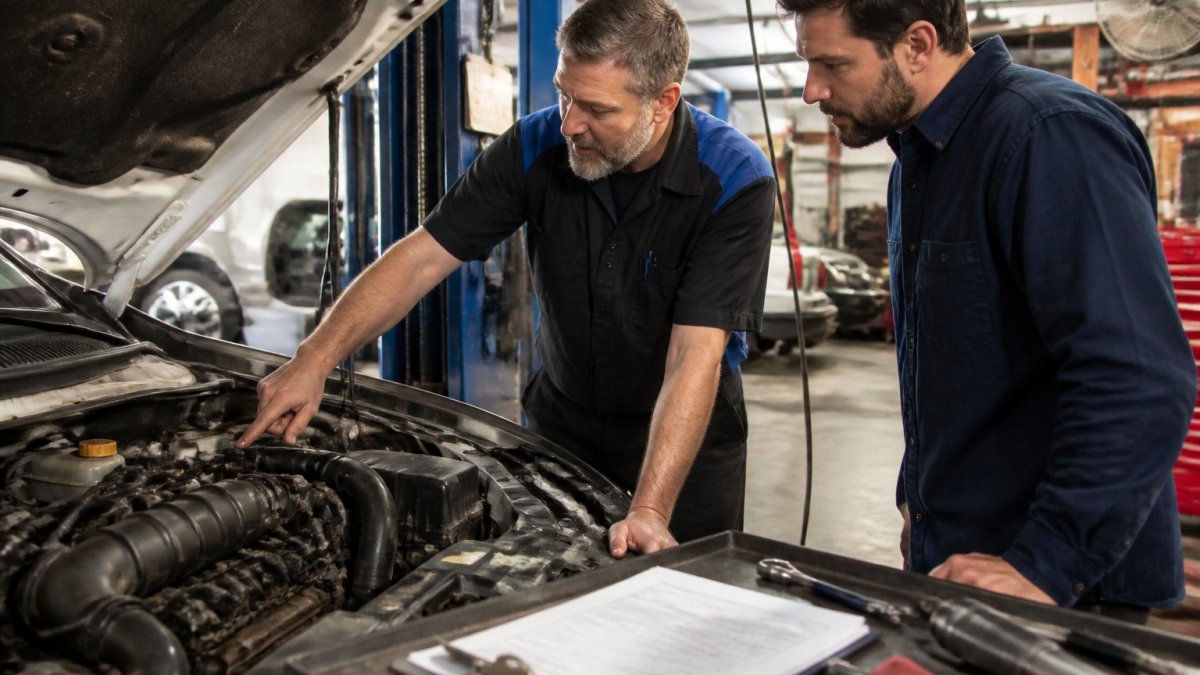
Ask whether the recommended repairs are urgent or preventive. Urgent repairs address current problems affecting safety or drivability. Preventive repairs address potential future problems.
Ask what happens if you decline certain repairs.
Ask about warranty coverage on the repairs. This matters enormously and is covered in detail below. A shop standing behind its work offers meaningful warranties. A shop that won’t guarantee repairs is signaling low confidence in the work quality.
Ask whether the shop will use OEM parts or aftermarket parts, and what the price difference is. You deserve to choose. Some repairs work fine with quality aftermarket parts. Other repairs benefit from OEM specifications.
Ask about timeline and vehicle availability. How long will the repair take? Will you get a loaner vehicle? Can you pick your car up during evening hours if you work during the day?
Auto Repair Warranty Comparison: Independent vs Chain
Warranty coverage is where the independent shop vs chain repair distinction becomes most visible. Warranties tell you whether a shop trusts its own work.
Warranty Coverage Differences
Chain repair centers typically offer standardized warranties: 12 months or 12,000 miles on parts and labor, sometimes with restrictions. These warranties are corporate policy, applied uniformly across all locations. The advantage is consistency, you know exactly what’s covered. The disadvantage is inflexibility. If your situation doesn’t fit the standard policy, you’re out of luck.
Independent shops offer more variable warranty terms, often because the owner has discretion to stand behind work on a case-by-case basis. Some independent shops offer 24-month warranties on major repairs. Others offer lifetime warranties on specific components like brakes or suspension. The terms depend on the shop’s confidence in its work and its business model.
Powder Spring BLT guarantees long-lasting repairs and stands behind the work with transparent communication about what’s covered and for how long. This commitment reflects our customer-oriented approach, we’re not just completing repairs, we’re building relationships with vehicle owners in the Powder Springs area who depend on reliable transportation.
Standing Behind the Work
The real test of a warranty is whether the shop honors it when problems arise. A warranty is worthless if the shop disputes claims or makes you jump through hoops to get coverage.
Independent shops often honor warranties more readily because the owner has direct authority to make decisions. If a repair fails and you bring the vehicle back, the owner can authorize a fix immediately without consulting corporate policy. This responsiveness matters when your vehicle breaks down unexpectedly.
Chain shops follow documented procedures for warranty claims. You submit a claim, it gets reviewed by management, and a decision is made according to policy. This process protects the company from fraudulent claims, but it also means legitimate claims sometimes get denied on technicalities. The bureaucracy that protects the company’s interests sometimes works against the customer’s.
Ask specifically about the warranty process before authorizing repairs. How do you file a claim? How long does the decision take? What documentation do you need? A shop confident in its work explains the warranty process clearly and welcomes questions. A shop that’s vague about warranties is signaling that honoring them might be difficult.
Why Independent Shops Often Deliver Better Value
The independent shop vs chain repair comparison often favors independent shops when you factor in total value over time, not just the initial repair cost.
Independent mechanics often develop deep expertise. This specialization builds expertise that chains struggle to match.
Specialization can lead to faster diagnosis and more accurate repairs. A specialist mechanic may identify problems more quickly. This can reduce diagnostic time.
Independent shops also adapt to your specific situation. This flexibility has real value when your vehicle is critical to your livelihood.
The relationship factor matters too. At an independent shop like Powder Spring BLT, you develop a relationship with mechanics who know your vehicle’s history.
Chain shops reset with each visit. You might see a different technician every time. That technician doesn’t know your vehicle’s history and has to start from scratch diagnosing problems.
The independent shop model also means the owner has a direct financial incentive to keep customers satisfied. If you’re unhappy, you tell others in your community, and the owner loses business.
Choosing between an independent shop and a chain repair center requires understanding how each model affects pricing, warranty coverage, and long-term value.
For vehicle owners in Powder Springs facing a repair decision, Powder Spring BLT offers the independent shop advantage: certified auto mechanics with years of experience, high-quality parts and modern equipment, customer-oriented communication, and detailed check-ups designed for vehicle longevity.
Frequently Asked Questions
Are independent auto repair shops cheaper than chain shops?
Independent shops often have lower overhead costs than chains, which can result in competitive or lower pricing. However, cost alone isn’t the deciding factor, quality of work, warranty coverage, and parts sourcing matter equally. Many vehicle owners find independent shops offer better value because they spend less on marketing and corporate infrastructure, passing savings to customers while maintaining quality standards.
What factors should I compare when evaluating auto repair estimates?
When comparing auto repair estimates, examine labor hours (rates vary by shop type and technician experience), parts quality (OEM vs aftermarket), and warranty terms. Request detailed breakdowns showing parts costs separately from labor. Check if the estimate includes diagnostics fees, and verify that both shops are quoting the same repair scope. Ask about warranty length and what’s covered.
How do auto repair warranties differ between independent shops and chains?
Chain shops typically offer standardized warranty terms, often 12 months or 12,000 miles on parts and labor. Independent shops vary widely, some offer comparable warranties, others provide longer coverage. The key difference is accountability: local independent shops depend on reputation and repeat customers, so they’re often highly motivated to stand behind their work. Always ask for warranty details in writing before authorizing repairs.
What questions should I ask a mechanic before approving a repair?
Ask why the repair is necessary, what happens if you delay it, whether parts are OEM or aftermarket, what the warranty covers, and how long the repair takes. Request a written estimate and ask if the shop will call before exceeding that cost. Ask about their technician certifications and experience with your vehicle’s make and model. Understanding these details helps you make informed decisions and avoid unnecessary work.
Related Posts

How to Judge an Auto Repair Shop’s Service Guarantee
-
Posted by
admin
Before you approve any repair, check what each service guarantees cover, how long they last, and whether labor is included.
Auto Repair Shops With Transparent Pricing: 2026 Guide
-
Posted by
Find auto repair shops with transparent pricing. Compare estimates, ask the right questions, and avoid surprise bills. Get a quote today.

How to Find Reliable Local Mechanics: 2026 Guide
-
Posted by
Learn how to find reliable local mechanics with our 2026 guide. Check reviews, ask the right questions, and compare quotes with confidence.
7 Steps to Book Professional Car Repair Services Online
-
Posted by
Skip the hassle of booking car repair in Powder Springs. Learn the 7 steps to get an estimate and schedule service online with confidence.