
Blog
Why Car Repairs Cost So Much: 2026 Breakdown
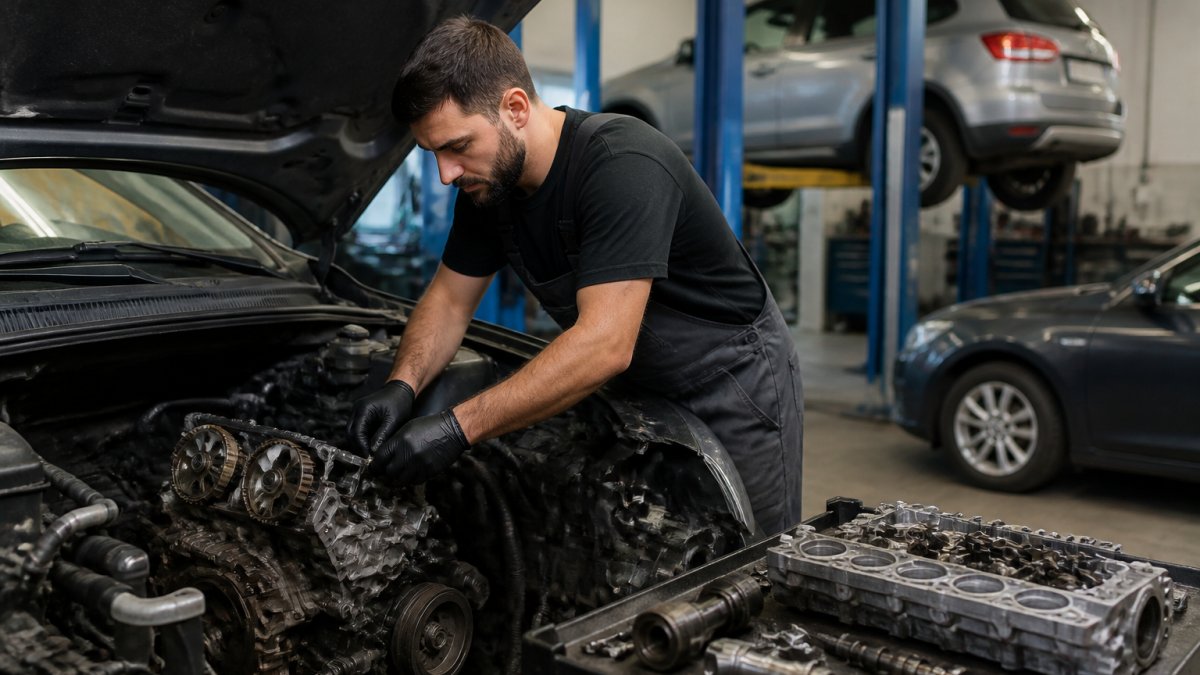
Table of Contents
- Why Car Repairs Cost So Much: The Main Cost Drivers
- Vehicle Complexity: Electronics, Sensors, and Diagnostic Time
- The Most Expensive Car Repairs and What They Involve
- How to Read a Car Repair Estimate Line by Line
- How to Lower Car Repair Costs Without Cutting Corners
- How to Compare Auto Repair Quotes Fairly
- Supply Chain, Tariffs, and Inflation: The Cost Outlook
- Frequently Asked Questions
Last Updated: October 15, 2026
Why Car Repairs Cost So Much: The Main Cost Drivers
If you’ve ever opened a repair estimate and felt your stomach drop, you’re not imagining it.
Below, we’ll break down each cost driver, show you how to read an estimate line by line, and explain how to lower car repair costs without cutting corners.
The single biggest shift in the past decade is vehicle complexity. A modern car isn’t just a mechanical machine; it’s a rolling network of computers, sensors, and wiring harnesses. That changes everything about how repairs are diagnosed and priced.
Higher Parts Costs and Model-Specific Components
Replacement parts have become more expensive because they’re more specialized. A bumper used to be a slab of plastic; now it may house radar sensors, cameras, and parking assist modules that must be replaced and calibrated together.
Supply chain disruptions made this worse. When a single factory overseas produces one component for one model line, any interruption ripples straight to the parts counter. Imported parts also carry tariffs and shipping costs baked into your bill.
Labor Rates and the Technician Shortage
Labor rates climb for a simple reason: there aren’t enough skilled technicians. Diagnosing a modern vehicle requires training in electronics, software, and advanced driver-assistance systems, not just turning wrenches, and shops compete for a limited pool of qualified people.
What most guides miss is that labor isn’t billed by the hour you wait. It’s billed by “labor hours,” a book time assigned to each job.
Always ask whether a diagnostic fee is credited toward the repair if you approve the work. Many shops apply it, but you have to ask. It’s one of the easiest ways to trim a bill without touching safety.
Vehicle Complexity: Electronics, Sensors, and Diagnostic Time
Diagnostic time is now a major line item, not an afterthought. Before replacing anything, a technician often has to trace a fault through multiple electronic systems, sensors, wiring harnesses, plugs and connectors, and time is what you’re paying for.
Automotive technology has also made disassembly and reassembly slower. Panels, trim, and components are packed tighter, and some repairs require removing unrelated parts just to reach the failed one. Specialized tools add cost too.
Advanced Driver-Assistance Systems and Calibration
Advanced driver-assistance systems are the newest cost driver, and the one most drivers don’t see coming. After a windshield replacement or bumper repair, cameras and radar sensors often need recalibration so the system aims correctly.
Skipping calibration isn’t an option. An uncalibrated system can misjudge distance or fail to warn you in time, a safety issue, not a convenience one.
The Most Expensive Car Repairs and What They Involve
The priciest repairs share a pattern: expensive parts, long labor hours, and difficult access. Transmission and engine repair top the list because they require extensive disassembly. Collision repair is expensive when it involves structure, sensors, and paint matching. Hybrid and electric battery replacement is costly because the battery itself is the single most expensive component in the vehicle.
Here’s a quick reference for the repairs that hit hardest and why:
| Repair | Why It’s Expensive | Key Cost Drivers |
|---|---|---|
| Transmission repair | Extensive disassembly and reassembly | Labor hours, internal parts |
| Engine repair | Deep access, precision work | Labor hours, model-specific parts |
| Collision repair | Structure, sensors, paint | Parts, calibration, labor |
| Hybrid/EV battery | Battery is the priciest component | Replacement cost, disposal |
| ADAS calibration | Requires targets and equipment | Diagnostic time, specialized tools |
How to Read a Car Repair Estimate Line by Line
A repair estimate is a document you are allowed to interrogate. The problem is that most estimates use shorthand the average driver has never been taught, so the numbers blur together.
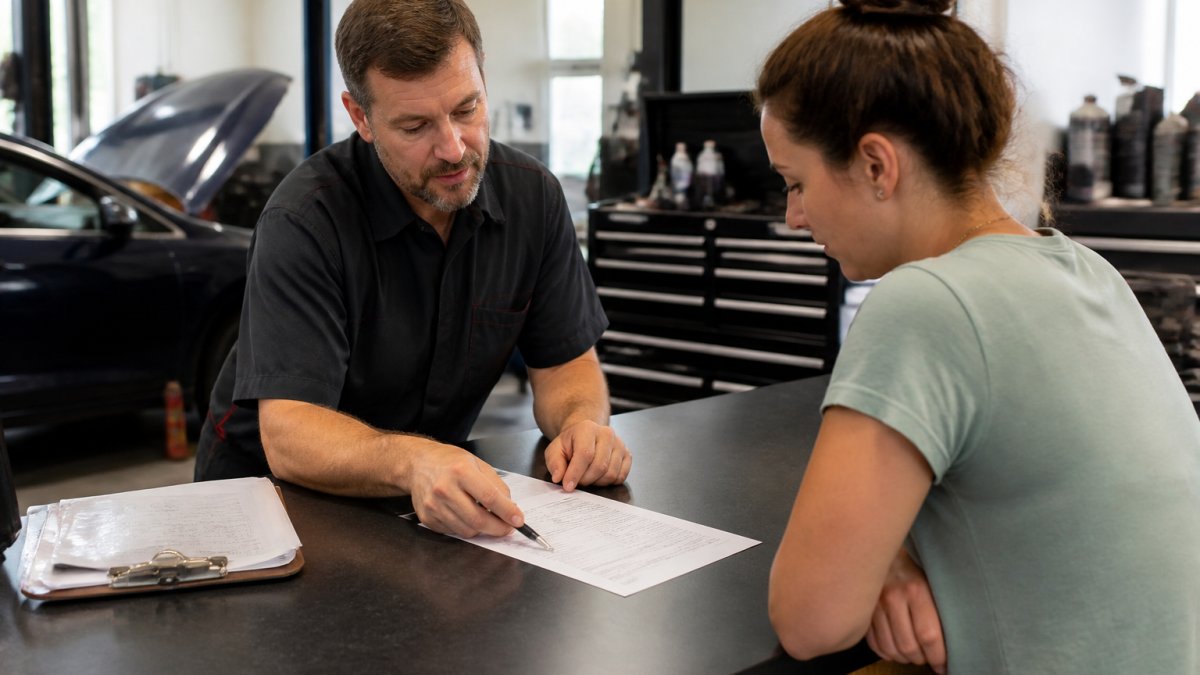
A complete estimate typically contains five categories of charges. If any is missing, ask why.
- Parts. Each part should be listed with a name, a part number, and a designation for OEM (original equipment manufacturer), aftermarket, or remanufactured. OEM parts are made or licensed by the automaker and usually cost the most. Aftermarket parts are made by third parties and range widely in quality. Remanufactured parts are original cores rebuilt to spec, common for alternators, starters, and transmissions.
- Labor. Labor is billed in labor hours, not clock hours. The automaker or an industry labor-time guide assigns a standard number of hours to each job, replacing a water pump might be listed at 3.2 hours even if the technician finishes in 2.5. You are billed for book time, not the technician’s actual speed. That is normal, not padding.
- Diagnostic fee. This is the charge for finding the problem. It is often a flat fee, and many shops credit it toward the repair if you approve the work. Always ask, it is one of the few line items that can legitimately disappear.
- Calibration and sublet charges. If the repair touches a camera, radar, or windshield, the estimate may include a calibration line. Some shops subcontract this to a dealer or specialist, which shows up as a sublet charge. These are real costs, not upsells, but they should be itemized separately.
- Shop supplies, environmental fees, and tax. Shops commonly add a percentage for consumables like cleaners, rags, and fluid disposal. Sales tax applies to parts and sometimes labor, depending on your state. Small individually, but they add up.
A worked example: suppose you are quoted $1,850 to replace a rear bumper cover with parking sensors. A transparent estimate might break down as:
- Bumper cover (OEM): $620
- Two parking sensors: $180
- Bracket and clips: $45
- Labor: 4.0 hours at $145/hour = $580
- Calibration of parking sensors: $175
- Shop supplies: $25
- Tax on parts: roughly $70
- Total: about $1,695-$1,850
If your estimate shows only “bumper repair, $1,850,” you cannot tell whether calibration was included, whether the parts are OEM, or how many labor hours were billed.
Ask the shop to email or text the itemized estimate before you approve anything. A written breakdown gives you time to compare line items against another quote without pressure at the counter.
Three questions to ask on every estimate:
- Which parts are OEM, aftermarket, or remanufactured, and does the warranty change based on that choice?
- How many labor hours are billed, and does that include calibration and testing?
- Is the diagnostic fee credited if I approve the repair?
If a shop cannot answer those three questions in plain language, get a second opinion before signing.
How to Lower Car Repair Costs Without Cutting Corners
You can reduce a repair bill without compromising safety, and the best methods are preventive. Routine maintenance, oil changes, fluid checks, brake inspections, prevents small problems from becoming expensive ones, and is almost always cheaper than the repair it avoids.
A few practical ways to lower car repair costs:
- Get a second estimate for any repair over a few hundred dollars
- Ask for an itemized breakdown before approving work
- Address warning lights early, before a small fault spreads
- Keep up with scheduled maintenance to protect engine and transmission life
- Ask whether aftermarket or remanufactured parts are safe options for your specific repair
Never approve a repair you don’t understand. If a shop won’t explain a line item in plain language, that’s a reason to walk away, not to sign. You can’t judge whether a charge is fair if you don’t know what it covers.
How to Compare Auto Repair Quotes Fairly
Comparing auto repair quotes fairly means comparing like for like, not just the bottom line. Two estimates for the same job can differ because one uses OEM parts and the other aftermarket, or because one includes calibration and the other quietly leaves it out.
When you compare, match these elements across every quote:
| What to Compare | Why It Matters |
|---|---|
| Parts type (OEM vs. aftermarket) | Changes both price and longevity |
| Labor hours listed | Reveals whether the job is scoped the same |
| Diagnostic fees | Often credited, sometimes not |
| Calibration included? | A hidden cost if omitted |
| Warranty on parts and labor | Tells you who stands behind the work |
Ask each shop to explain their quote in the same terms. A shop that welcomes the comparison is usually the one worth trusting.
Supply Chain, Tariffs, and Inflation: The Cost Outlook
Inflation raises the cost of everything a shop buys, parts, tools, diagnostic subscriptions, insurance, and rent. When operating costs rise, labor rates follow.
Supply chain pressure and parts availability still affect certain components.
Tariffs on imported parts raise the landed cost of anything sourced overseas.
Vehicle age and ownership trends matter just as much. The average car on the road is older than ever, and people are keeping vehicles longer.
That last point is where the repair-versus-total-loss decision comes in, and it is the part most guides skip.
When a Repair Becomes a Total Loss
Insurance companies do not decide whether to repair your car based on how much you love it.
A common industry threshold: if the estimated repair cost exceeds roughly 70% to 80% of the vehicle’s ACV, many insurers will declare the car a total loss rather than pay for the repair.
This changes the math on older vehicles. A $4,500 transmission repair on a car worth $6,000 may push past the threshold, even though the repair itself is reasonable. On a car worth $18,000, the same repair is a straightforward claim.
How Deductibles and Coverage Shape Your Out-of-Pocket Cost
If the repair stems from a collision or a comprehensive event like a tree branch through a windshield, your auto insurance may cover it, but only after your deductible. A $1,000 deductible means you pay the first $1,000 and the insurer covers the rest, up to your policy limits.
Mechanical breakdowns are different. Standard auto insurance does not cover wear-and-tear failures like a worn transmission or a failed water pump. Those are out of pocket unless you purchased a separate mechanical breakdown or extended service contract.
Before authorizing a major repair, ask three questions: What is my car’s current market value? Does my insurance cover this type of failure? And if it does, is the repair cost likely to exceed my insurer’s total-loss threshold? The answers tell you whether you are paying out of pocket, filing a claim, or shopping for a replacement vehicle.
What This Means for the Next Few Years
Repair costs are unlikely to fall. Newer vehicles carry more sensors, more software, and more calibration requirements, and each adds a line to the estimate. Shops are investing in the equipment and training to service those systems, and those investments show up in labor rates. The practical takeaway is not to fear the trend but to plan for it: keep up with maintenance, budget for the repairs your vehicle is likely to need as it ages, and read every estimate with the same scrutiny you would apply to any other major purchase.
Frequently Asked Questions
Why are car repairs so expensive?
Several factors stack up at once. Modern vehicles carry more electronic systems, sensors, and wiring harnesses, so diagnostic time and disassembly take longer. Replacement parts are often vehicle-specific and cost more than generic components. Labor rates have climbed as shops compete for a shrinking pool of skilled technicians. Add supply chain disruptions, imported parts tariffs, and general inflation, and the same repair that cost far less a decade ago now carries a much higher bill.
What is the $3,000 rule for car repairs?
The $3,000 rule is a rough guideline some drivers use: if a repair estimate approaches or exceeds $3,000, compare it against your vehicle’s current value before approving the work. If the repair cost is a large share of what the car is worth, a total loss or replacement decision may make more sense. It is not an official standard, just a practical threshold for starting that conversation with your shop.
Are parts or labor usually more expensive for car repairs?
It depends on the job. Collision repair and engine or transmission work often swing toward parts costs because the components themselves are expensive and vehicle-specific. Diagnostic-heavy jobs, like tracking down an intermittent electrical fault, swing toward labor because the technician may spend hours tracing wiring harnesses and connectors before replacing anything. Ask your shop to break the estimate into parts, labor hours, and diagnostic fees so you can see which side is driving the total.
How can I tell if a car repair estimate is fair?
Request an itemized estimate that lists parts, labor hours, and diagnostic fees separately. Ask whether the parts are OEM, aftermarket, or remanufactured, since that changes the price and warranty. Then get a second quote for the same repair from another shop and compare line by line, not just the bottom-line number. A shop that explains each line and puts the warranty in writing is giving you what you need to judge fairness.
Related Posts
7 Steps to Book Professional Car Repair Services Online
-
Posted by
admin
Skip the hassle of booking car repair in Powder Springs. Learn the 7 steps to get an estimate and schedule service online with confidence.